The details you retype every time
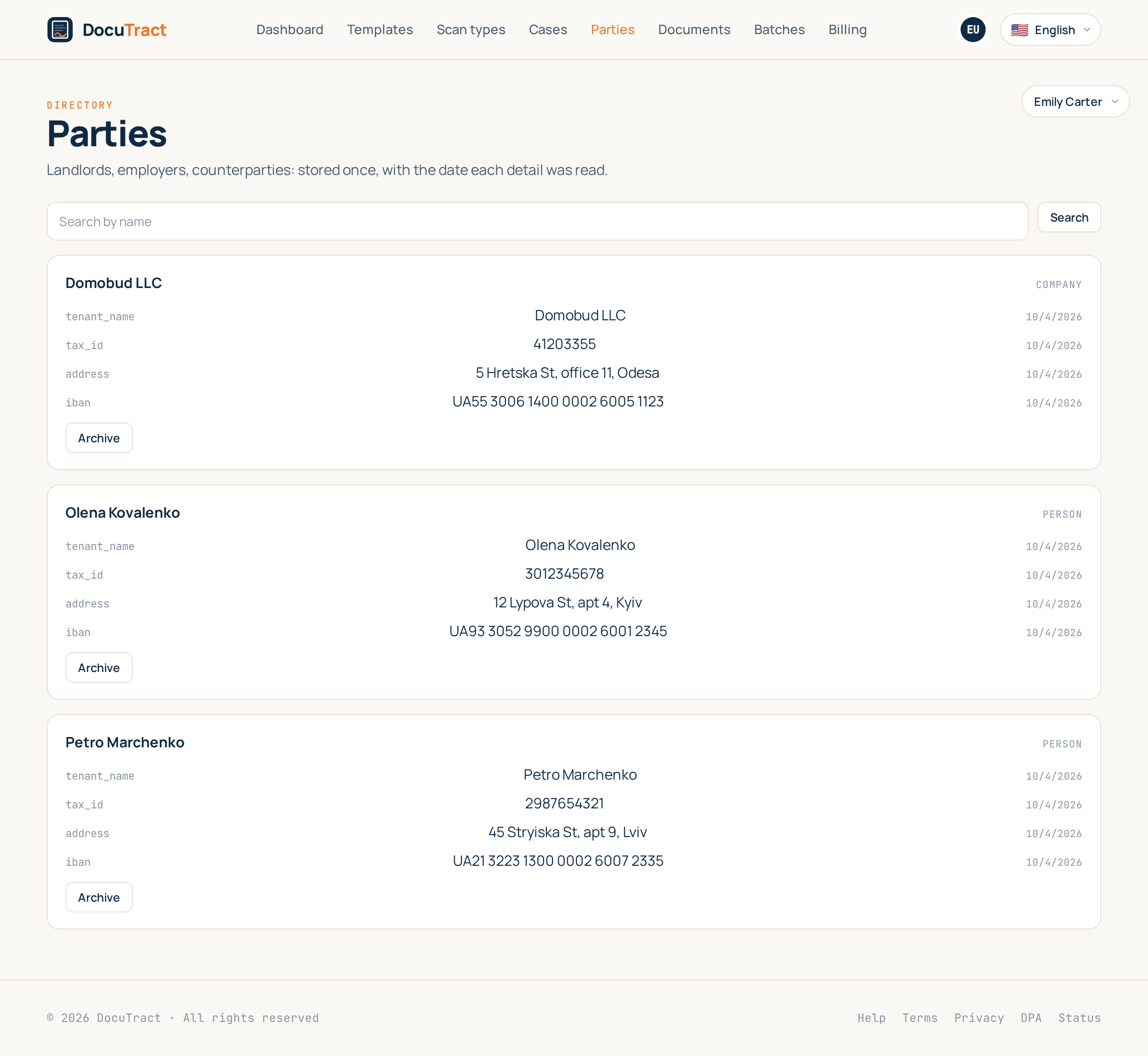
The parties directory is live. The landlord, the employer, the counterparty you enter for every deal, stored once, with the document each detail came from and the day it was read.
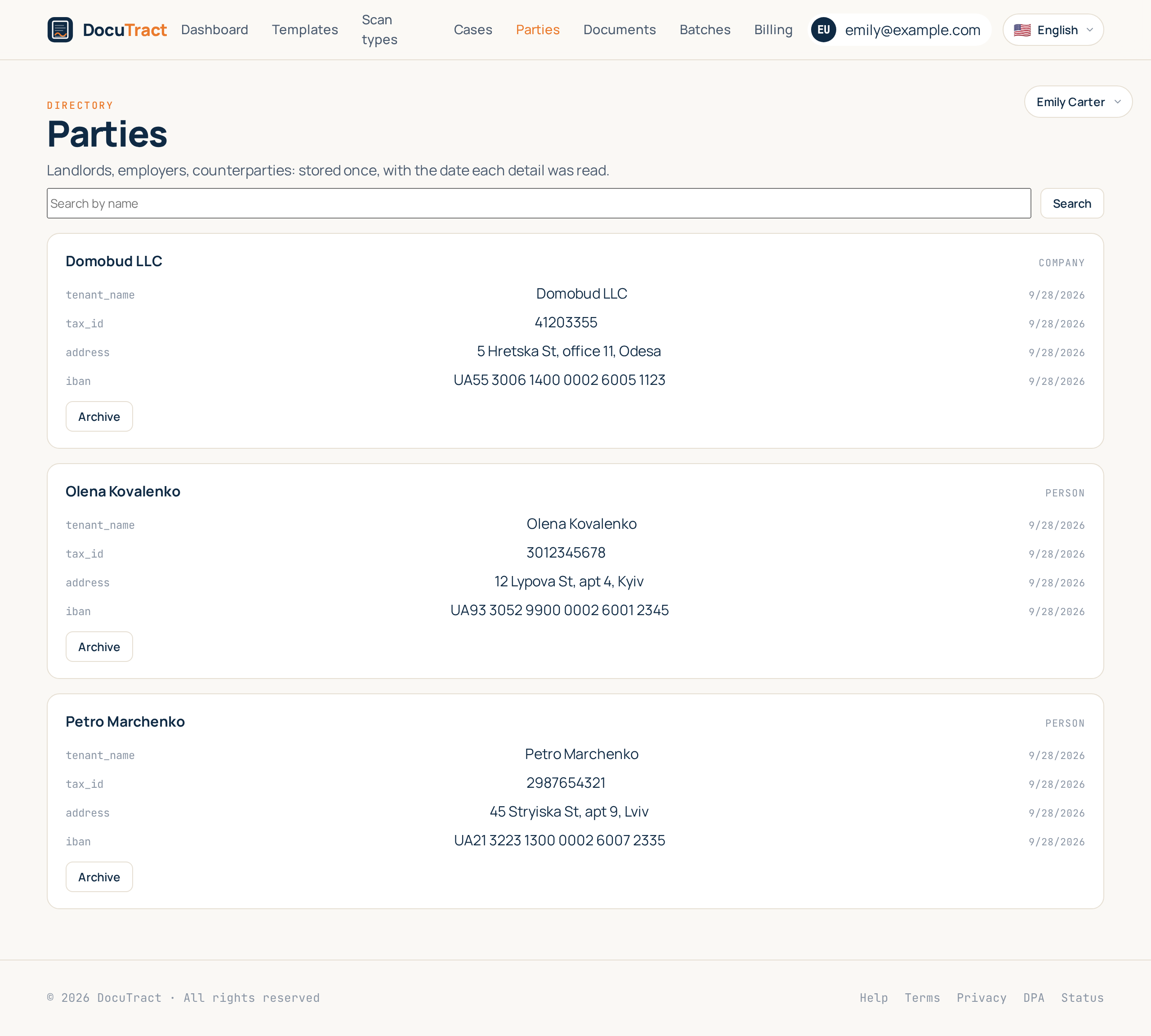
There is a particular kind of tedium in preparing documents that has nothing to do with documents. The same landlord appears in nine leases a year. The same company's registry code is typed out every time somebody drafts an invoice. Nobody is reading these off a scan any more; they are reading them off the last document, or off a sticky note, or out of memory.
DocuTract now keeps them, and keeps them honestly.
Saved from the screen you are already looking at
The moment to store a counterparty is the moment somebody has just confirmed their details. So the control is on the review screen, next to the values: Save this party. The card is built from what is on the screen, with the scan each value came from and the date it was read.
That last part is the whole design. A stored bank account is useful. A stored bank account that says "read on 3 March" is useful and honest, because the person using it can see how much to trust it.
Filled back in, without stepping on you
Pick a party when you prepare the next document and its fields fill in. Two restraints, both deliberate:
- Only fields your template reads from a scan are touched. A value the template computes or you always type is yours.
- A value you corrected yourself is never overwritten. The directory is a starting point, not a second opinion about your decision.
And the provenance survives the round trip: the card remembers the scan the value was read from, so a document filled from the directory can still answer "where did this come from" with a page rather than a shrug.
Anything old enough says so
Past six months, a value is marked "please re-check" on the card and wherever it is offered. It is still offered. You know whether the bank account changed; we do not, and a product that quietly withheld it would be making that call for you.
Changing a value does not erase the old one either. The previous value stays as history, so "what did the card say when that document was generated" has an answer.
Archived, not deleted
A party that is no longer current is archived. Documents you have already generated point back at the card, and tidying a list is not worth breaking that link. An archived card leaves the picker and stays in the record.
Where it sits
The directory is part of Pro and above. If a workspace moves to a plan without it, it keeps what it has and keeps filling documents from it; only adding and changing cards stops. Taking away data somebody put in would be a strange way to sell a plan.
What is next
The fifth feature is conditional blocks and template versions: a clause that appears only when there is a guarantor, a section repeated once per tenant, and a record of which version of a template each document was built with.
The whole list is in what we are building next, and the step by step for the directory is in the help centre.
Keep reading
A template from the document you already have
You do not need to mark up a contract by hand to turn it into a template. Upload a finished document, and DocuTract proposes which parts change from client to client.
A password is no longer enough
Two-factor sign-in is live. Add an authenticator app to your account, and a stolen password stops being a way into your documents. Workspace owners can require it of the whole team.